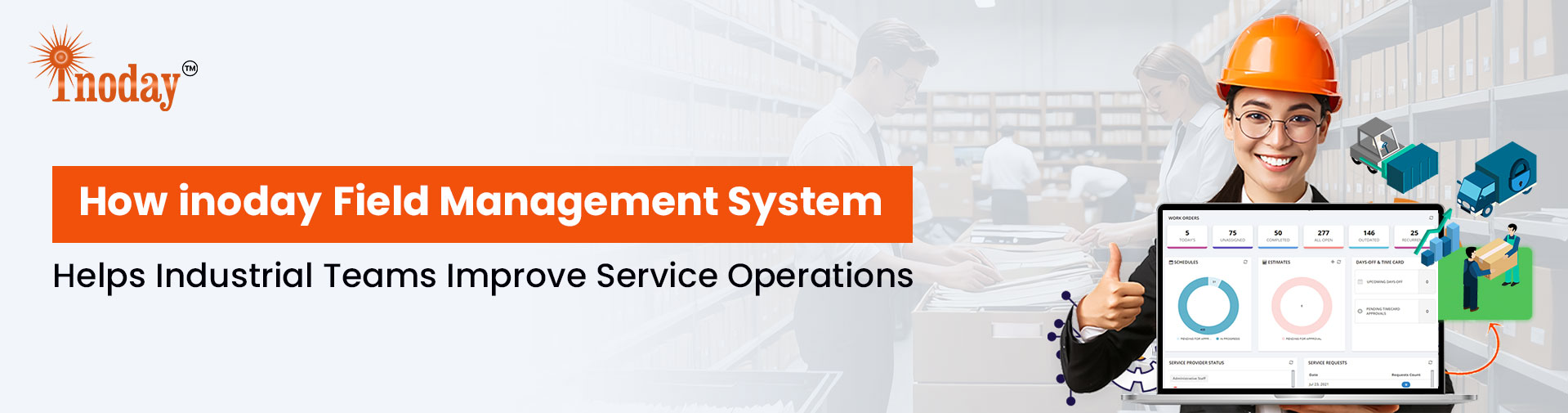
Why many organizations are moving to a field management system that brings work orders, technician scheduling, asset tracking, and service visibility into one connected workflow. Field Management System helps industrial teams reduce manual effort, improve maintenance planning, and manage field operations with greater control.
Industrial service operations depend on speed, accuracy, and coordination. Whether the business is managing manufacturing equipment, utility assets, or facilities maintenance, even small delays can affect uptime, service quality, and customer satisfaction.
Why industrial field service is hard to manage
Field service in industrial environments is more complex than simply assigning a technician to a job. Teams often deal with multiple locations, urgent service requests, preventive maintenance, parts availability, and customer expectations at the same time.
Without a connected system, information gets scattered across emails, spreadsheets, phone calls, and separate tools. That makes it harder to track service progress, prepare technicians properly, and respond quickly when equipment issues arise.
A field management system helps solve these problems by creating a structured process for scheduling, dispatching, maintenance, and reporting.
How inoday supports field operations
inoday Field Management System is built to help industrial organizations manage the full-service cycle more effectively. It supports the daily tasks that field teams depend on, while also giving managers better visibility into what is happening across operations.
The platform helps teams:
- Assign work orders faster.
- Match technicians to the right jobs.
- Track equipment and asset history.
- Plan preventive maintenance more effectively.
- Improve communication between office and field teams.
- Maintain service records in one system.
This creates a more reliable workflow and reduces the operational friction that often slows down field service teams.
Smarter scheduling for technicians
One of the biggest challenges in field service management is scheduling the right technician at the right time. If the assigned person does not have the right skills, is too far away, or is already overloaded, service delays become more likely.
inoday helps improve scheduling by considering technician location, skill set, availability, and job priority. That makes it easier to dispatch resources efficiently and keep service commitments on track.
For industrial organizations, better scheduling can lead to faster response times, lower travel costs, and improved first-time fix rates.
Better asset tracking and visibility
Industrial businesses often manage a large number of assets, machines, and equipment across multiple sites. If those assets are not tracked properly, it becomes difficult to know when maintenance is due or what service has already been performed.
inoday Field Management System gives teams better visibility into:
- Equipment history.
- Maintenance schedules.
- Ownership records.
- Asset location.
- Real-time service status.
With this information in one place, managers can make better decisions about service planning and avoid unnecessary downtime.
Preventive maintenance becomes more practical
Preventive maintenance is essential for industrial operations, but it only works well when service planning is consistent. If maintenance is missed or scheduled too late, small issues can turn into expensive breakdowns.
inoday helps organizations automate recurring maintenance tasks based on service intervals, usage, or predictive triggers. This makes it easier to stay ahead of equipment to wear and reduce unplanned interruptions.
For plants, utilities, and facilities teams, that means more predictable operations and better equipment reliability.
Mobile tools for field technicians
Technicians need access to service information while they are in the field. They cannot wait for office follow-ups when they are handling urgent repairs or remote service requests.
The mobile capabilities in inoday Field Management System allow technicians to:
- View assigned jobs.
- Access to work history and manuals.
- Check parts availability.
- Update service progress.
- Capture notes and photos.
- Work online or offline when connectivity is limited.
This improves accuracy in service reporting and helps field teams complete jobs with better context and less delay.
Real-time coordination across teams
Industrial field service depends on communication between dispatchers, supervisors, customer support teams, and technicians. If these teams are not aligned, the service process becomes slower and less predictable.
inoday improves coordination by giving all stakeholders access to updated information on job status, technician movement, service history, and inventory levels. That helps reduce callbacks, avoid confusion, and keeps customers better informed.
Stronger coordination also helps teams react faster to urgent service requests and shifting priorities.
Where it creates the most value
inoday Field Management System is especially useful for:
- Manufacturing organizations.
- Utility service providers.
- Energy companies.
- Facilities management teams.
These industries often deal with mission-critical equipment, tight service timelines, and a strong need for uptime. A field management system helps them manage those pressures more effectively while maintaining service quality.
Key capabilities of inoday Field Management System
The platform includes the core capabilities industrial service teams need to stay organized and responsive:
- Resource scheduling optimization.
- Technician skills and certification tracking.
- Mobile and offline access.
- Real-time asset monitoring.
- Integrated inventory management.
- Customer portal access.
Together, these features help teams reduce manual work, improve service execution, and maintain better control over field operations.
Final note
Industrial field service works best when teams have the right tools, the right information, and a clear process. inoday Field Management System helps organizations bring those elements together so they can manage technician scheduling, asset maintenance, and service execution with greater confidence.
For businesses that want better control over field operations, improved uptime, and stronger service coordination, it offers a practical path forward.

Frequently asked questions
1. What is a field management system?
A field management system is software used to manage work orders, technician scheduling, maintenance tasks, asset tracking, and field service operations from one platform.
2. Who can use inoday Field Management System?
It is designed for industrial organizations such as manufacturers, utility providers, energy companies, and facilities management teams.
3. How does it improve service efficiency?
It improves efficiency by automating scheduling, improving visibility, reducing manual coordination, and helping technician’s complete jobs faster with better information.
4. Does it support mobile field service work?
Yes. Technicians can use mobile tools to access service details, update records, capture notes, and continue working even when internet access is limited.
5. Can it help reduce downtime?
Yes. By supporting preventive maintenance and better asset tracking, the system helps organizations identify issues earlier and avoid unexpected equipment failures.